

Protecting Office Stairwells from Smoke: Two Effective Approaches

In a fire situation, smoke is often a greater threat than the flames themselves. It can spread rapidly throughout a building, reducing visibility, affecting breathing, and compromising escape routes. Maintaining a clear stairwell is therefore a critical part of any fire safety strategy.
There are two primary methods of achieving this objective:
Option 1: Smoke Extraction
Smoke extraction systems remove smoke from the stairwell once it enters the space. By using mechanical or natural ventilation, smoke is directed out of the building, helping to maintain visibility and creating safer conditions for occupants evacuating the premises and for firefighters entering the building.
This approach manages smoke after it has reached the escape route, ensuring concentrations are kept at a safe level and preventing excessive build-up.
Option 2: Prevention Through Air Separation
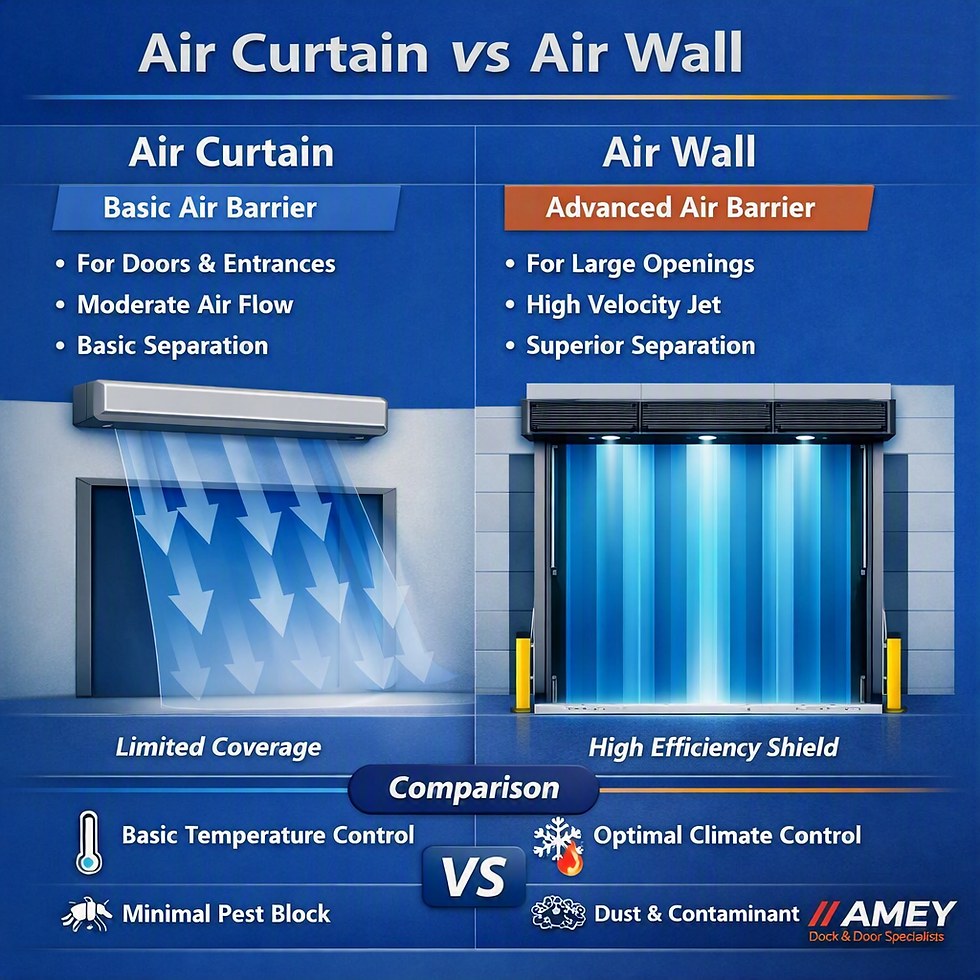
An alternative approach is to prevent smoke from entering the stairwell in the first place. Air separation systems are installed at stairwell doorways, creating an invisible air barrier that helps isolate the escape route from adjacent areas affected by smoke.
By maintaining separation between the stairwell and the fire compartment, smoke migration can be significantly reduced, helping to keep the stairwell clear and available for evacuation.
This approach focuses on containment and prevention rather than extraction.
Two Different Methods, One Common Goal
While the technologies differ, both solutions are designed to achieve the same result: a safer, smoke-free escape route for building occupants.
Smoke extraction removes smoke after it enters the stairwell, whereas air separation works to stop smoke from entering the stairwell in the first place. Depending on the building design, fire strategy, and operational requirements, either approach may be appropriate, and in some cases both methods can be used together to provide enhanced protection.
The ultimate objective remains the same: protecting life safety by ensuring escape routes remain usable when they are needed most.

Comments